

Feel the emotion. Choose the response.
Human decision architecture applied in REAL time
DCP gives structure at that exact moment where emotion becomes action.
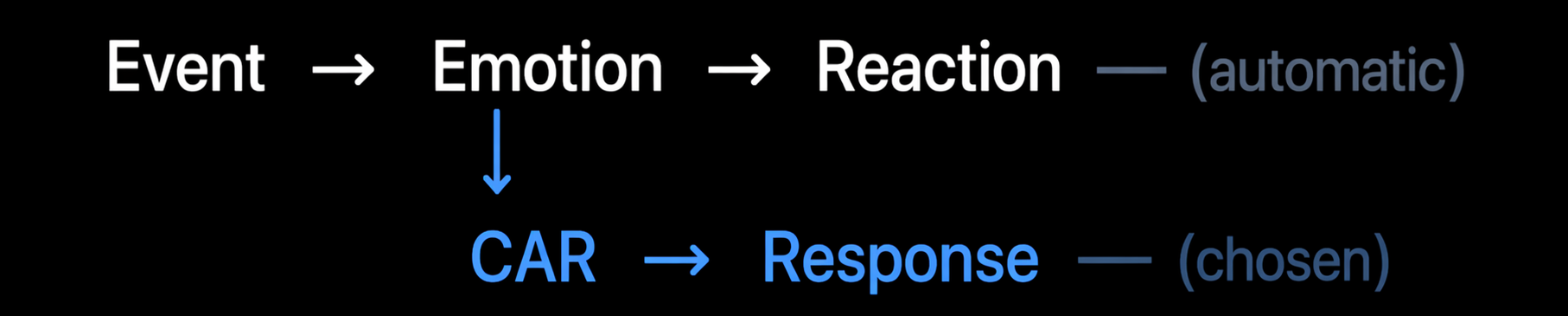
DCP operates within the existing sequence. Called in when there is an awareness of emotion. Not to remove, but to structure what happens next.
What you say or don’t say, what you do or don’t do... it’s all a choice within emotion. All of it carries direction.
Words, actions, and inaction can create conflict or clarity depending on how they are delivered. What you place in your field matters. Attention determines input. Input determines emotion. CAR determines what follows.
The critical moment between emotion and outcome.
Without structure, behavior stays automatic. With structure, it becomes intentional.
DCP does not replace behavior. It structures it in the moment it matters. It is not designed to manage people. It helps people manage themselves. You do not control the field. You control how you respond within it. DCP applies across the full spectrum of behavior — from everyday reactions to high-stakes, destructive patterns.
Emotion → Reaction
- When an event occurs, emotion moves directly towards reaction.
- Without awareness, reaction becomes behavior.
CAR → Response
- When emotion strikes, CAR processes reaction into a response.
- With awareness, reaction can be directed.
The Decision Engine
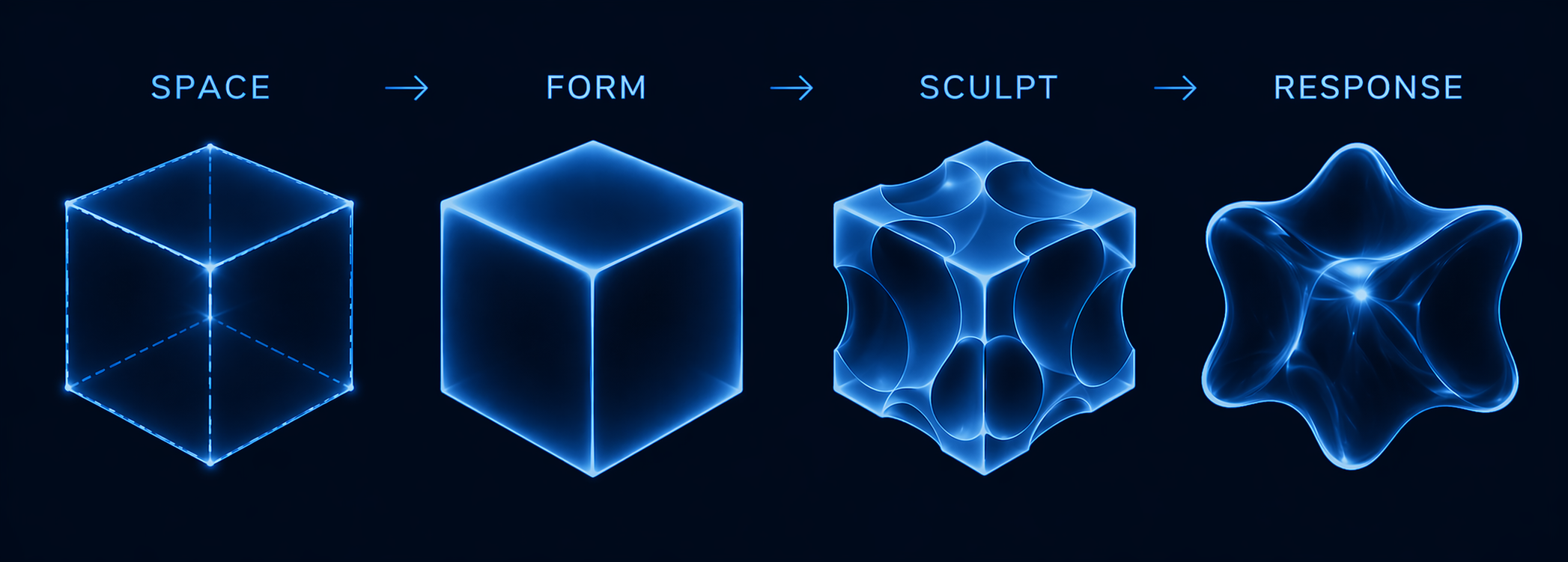
sculpts emotion into an intentional response.
CAR engages within that brief space of time to form a better response before it is expressed. It acts as a filter, not a delay.
Thought and emotion move together, creating form. They shape each other in real time. CAR determines what they become.
What is happening?
See the moment clearly before you act. This is where reaction is recognized before it becomes behavior.
What is my role?
Own your part in what happens next. This is where direction begins to take shape.
What is the best response?
Shape it before you express it. Choose direction instead of defaulting to impulse.
The Recognition Gap
Recognition does not equal correction. People often know something is wrong while it is happening and still proceed the same way. DCP provides structure to act during the moment, not after it. This is the gap between recognizing and choosing.
Emotion is inevitable
When events occur the issue is what happens next.
Reaction is automatic
Without structure, reaction tends to repeat and reinforce itself.
Response is chosen
Reaction is processed into a choice you own and are responsible for.
This is where patterns are formed
Repeated responses become patterns. Over time, they become learned habits. DCP targets the moment that creates them. The past may explain the pattern. It does not control the chosen response.
Go deeper if you want the full framework.
DCP belongs to the individual. When integrated into future systems, it becomes a continuity layer — allowing those systems to align with established patterns without replacing personal agency.

